What to check before booking dune buggy time in Dubai
Booking a desert drive sounds simple until the small details start to matter. A buggy trip is not just a transfer to sand and a few turns in the dunes. The experience depends on timing, terrain, vehicle type, safety rules, and what is included in the package. A little checking before payment helps avoid mismatches, especially when different operators describe similar outings in very different ways.
The best approach is to read the offer as a set of practical promises. Look past the photos and short descriptions, then ask what the day actually involves. If anything is unclear, request plain answers before confirming. A clear booking is easier to enjoy, and it is also easier to adjust if plans change.
Vehicle type and driving format
Start with the vehicle. A buggy can mean a single-seat quad, a two-seat dune buggy, or a larger side-by-side, and each one feels different on sand. A solo rider may prefer a smaller machine with quick response. Couples and families often prefer a two-seat or shared vehicle with a clearer sense of control. If two people both want to drive, check whether that is allowed and how driving time is shared.
Ask whether the route is guided, convoy style, or self-driven within a set area. A guided route usually suits first-timers because the pace and line through the dunes are managed. A self-drive format can feel more free, but it also asks more from the driver in terms of judgement and control. The right choice depends less on speed and more on comfort with uneven ground.
Check the description of the engine and transmission only in broad terms if technical details are not provided. What matters for most riders is whether the vehicle is easy to handle, suitable for the group, and matched to the terrain. If the listing mentions automatic drive, limited driving experience may still be fine. If it assumes previous quad biking experience, be honest about your background.
Driver rules, licences, and age limits
Driving rules are one of the most useful things to confirm early. Age limits may apply to drivers and passengers, and they can differ by vehicle type. Some packages allow children as passengers, while others are built around adult drivers only. A family booking should never rely on assumptions here.
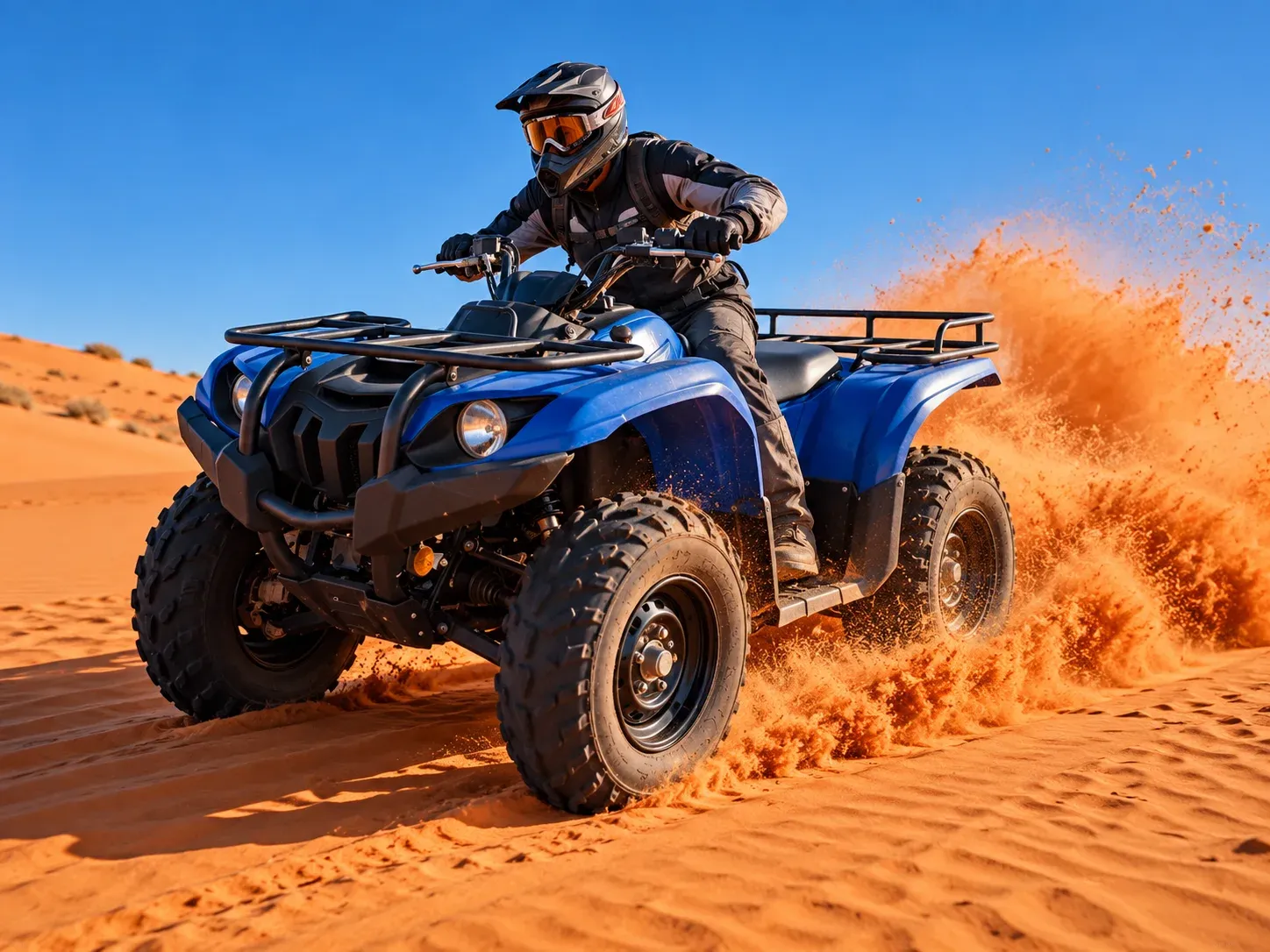
Ask what identification is needed on the day and whether a driving licence is required for certain vehicles. Rules can depend on the activity format and the area used. If a licence is listed as required, treat that as a firm requirement rather than a suggestion. It is also worth asking whether there is a difference between driving on a closed desert route and driving on public roads to reach it.
Insurance and responsibility should be clear too. Find out what is covered, what is not, and what happens if a rider damages a vehicle through careless driving. The answer may affect how cautious you are with acceleration, sharp turns, and close following distances. A professional operator will usually explain this in simple terms before the ride starts.
What the route actually includes
Sand is not all the same. Some trips use rolling open dunes, while others include steeper climbs, ridge lines, and tighter turns. The Lahbab desert is often associated with dramatic red sand, and the Red Dunes can look spectacular in low light. That terrain can also be more demanding than flat sand, so the route should match the ability of the group.
Ask how long the driving portion lasts, not just the total tour duration. A long package may include pickup, photos, a camp meal, and entertainment, with less time on the buggy than expected. A shorter package may be mostly driving. Neither is wrong, but the value depends on what you want from the day.
One of the most practical points to check is the balance between driving and stops. Frequent stops can make the experience feel relaxed, but they also cut into time on the sand. Long stretches without a break can be tiring, especially in warm months. Ask where the vehicle route begins, whether there is a briefing first, and how much time is spent getting ready.
When comparing dubai dune buggy tours, pay attention to the route description rather than the headline duration. The same number of hours can mean very different days. A package with a short drive and a long camp visit suits someone who wants a full evening. A route focused on dune bashing and driving suits someone who wants more time in the saddle.
Safety briefing and driving conditions
A good safety briefing should be part of the experience, not an afterthought. It should cover how to start and stop, how to keep a safe distance, what to do on slopes, and what signals are used during a guided ride. If the explanation feels rushed or the route seems unclear, ask for clarification before heading out.
Protective gear is another point to check. Helmets are standard for this kind of activity, and gloves or goggles may be useful in sandy conditions. Ask what is supplied and what riders should bring. Loose clothing, open footwear, and long scarves can be awkward around vehicles, so practical dress matters more than appearance.
Weather changes the feel of a desert trip. Hot sand and bright sun can make midday rides tiring, while late afternoon light is often more comfortable and better for photos. A sunset safari may be appealing, but it can also be busier and more structured. Check whether the route changes in the heat or after rain, and whether the operator pauses or adjusts plans when conditions are poor.
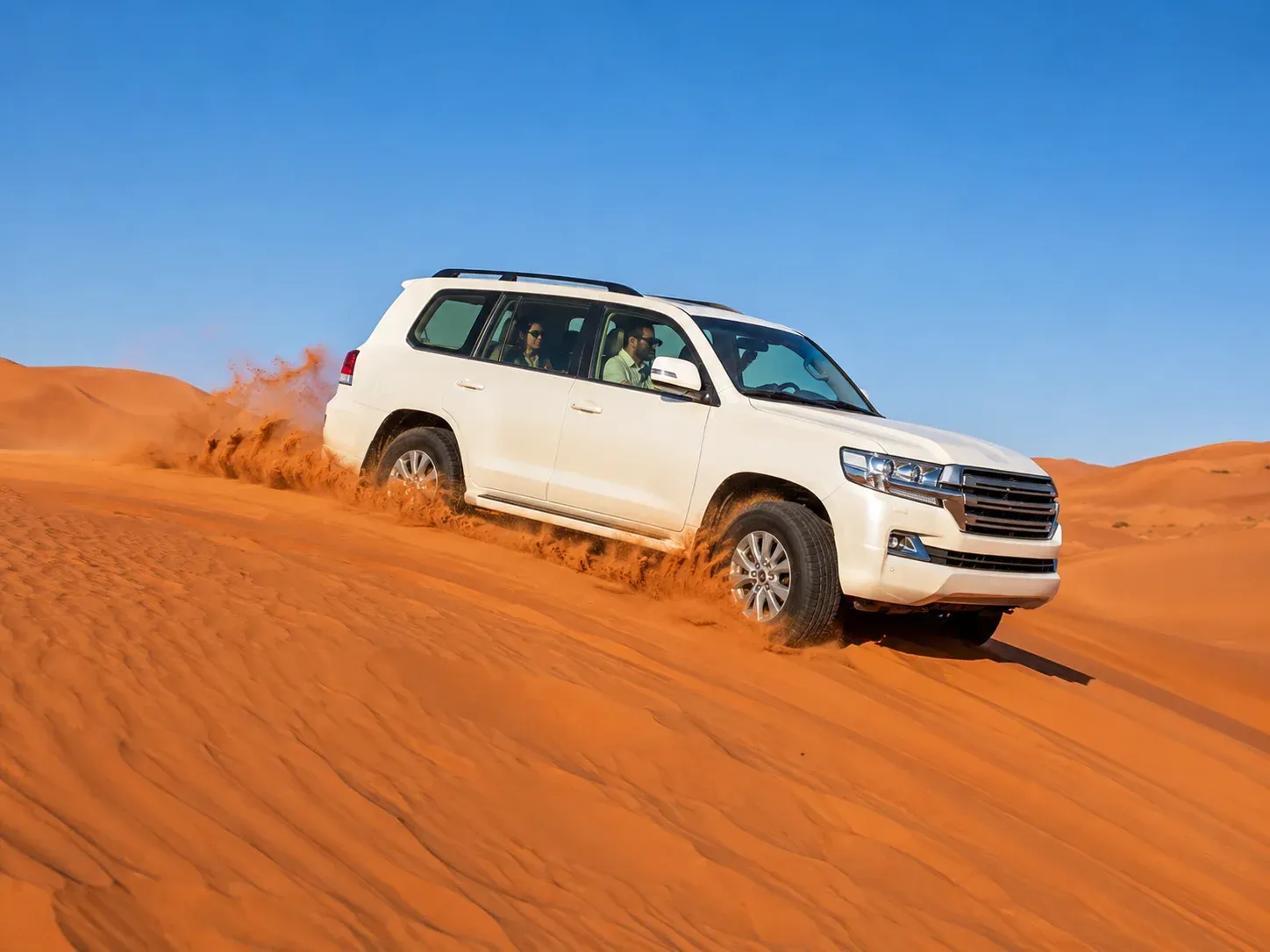
Driving technique matters as well. Riders should avoid sudden steering on steep slopes, keep a steady distance from other vehicles, and follow the guide's instructions on line choice. If a vehicle feels unstable, the sensible response is to slow down and tell the guide rather than push on. Sand can hide dips and soft patches, so patience is often faster than force.
Pickup, timing, and meeting point
Transport details can shape the whole day. Check whether pickup service is included and where pickup is available. If it is not included, confirm the meeting point and how early to arrive. Getting lost near the start of a desert route can eat into the booking, and late arrival may reduce the driving time.
Ask for the sequence of the day in plain language. A typical outline might include pickup, arrival at the desert base, paperwork, safety briefing, driving session, photo stop, and drop-off. If a desert camp meal is part of the package, check whether it comes before or after the drive. That order can matter for comfort, especially before active driving.
It is also worth checking how groups are arranged. Mixed groups can be fine, but a private-style booking may suit families or riders with different experience levels. Ask whether groups are split by skill, vehicle type, or pace. If one rider wants a gentle route and another wants a more energetic drive, that difference should be handled before the booking is made.
Inclusions, exclusions, and small print
Read the inclusions carefully. The driving session, guide, fuel, helmets, water, meals, photos, and entry to a desert camp may be listed together, but not every package includes all of them. A lower headline price can look less attractive once extras are added. A higher priced option may be better value if it includes the parts you actually care about.
Check food and drink details if the trip runs through meal time. A camp meal may be a simple buffet or a more formal setting, and dietary needs should be raised in advance. Water is especially relevant in the desert. Ask whether drinking water is supplied during the driving portion or only at the base.
Photos and videos are another common source of confusion. Some packages include basic photos, while others offer them as an extra. If images matter, ask who takes them, when they are taken, and how they are provided. Do not assume that a camera on the vehicle means a professional photo service is included.
Cancellation and rescheduling terms deserve a careful read as well. Desert plans can be affected by weather, travel changes, and health issues. Clear terms make it easier to know what happens if the day cannot go ahead as planned. Look for the deadline, the process for changes, and whether the rules differ for private and shared bookings.

Fitness, comfort, and personal limits
Dune driving can be more physical than it looks. Steering, braking, and balance all matter, and rough ground can be tiring over time. Riders with back problems, neck issues, or limited mobility should think carefully about bumpy terrain and ask about the route before booking.
Comfort also depends on the seat, the space, and the length of the session. A rider who is tall or broad may need more room than a compact vehicle provides. Passengers should check visibility and seating position, especially if the route includes long climbs or fast stretches.
A final read before you confirm
Before paying, make a short list of the answers you received and compare them with the booking page. Confirm the vehicle, driver rules, route style, driving time, safety briefing, pickup details, gear, inclusions, and cancellation terms. If the offer still feels vague, ask one more round of questions rather than filling gaps with guesswork.
Good preparation does not remove the spontaneity of a desert day. It simply makes the experience easier to enjoy. When the practical points are settled, the ride can be judged on what matters: safe handling, a route that suits the group, and enough time to take in the dunes without rushing from one stop to the next.